Best Traditional German Chocolate Cake Recipe
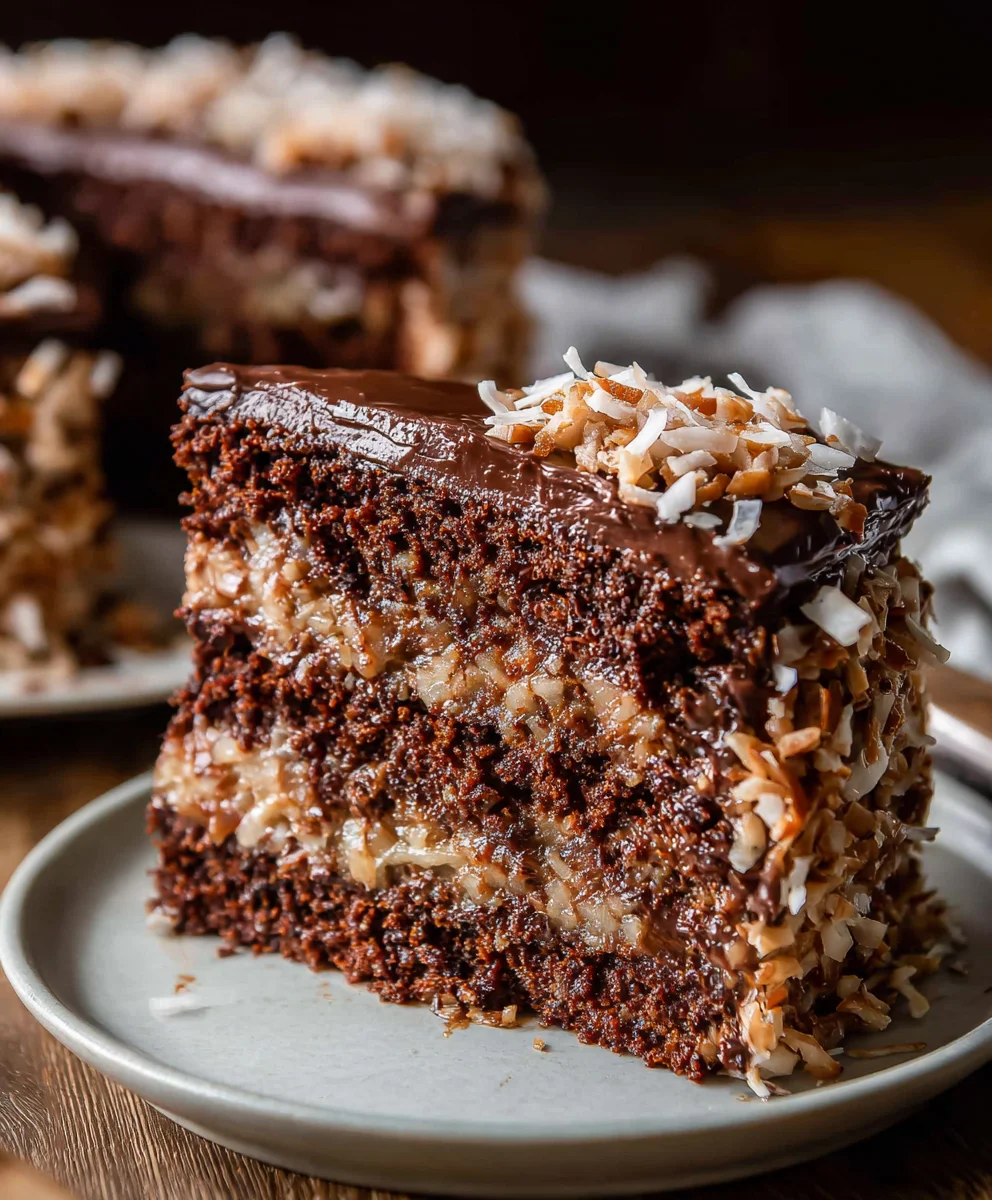
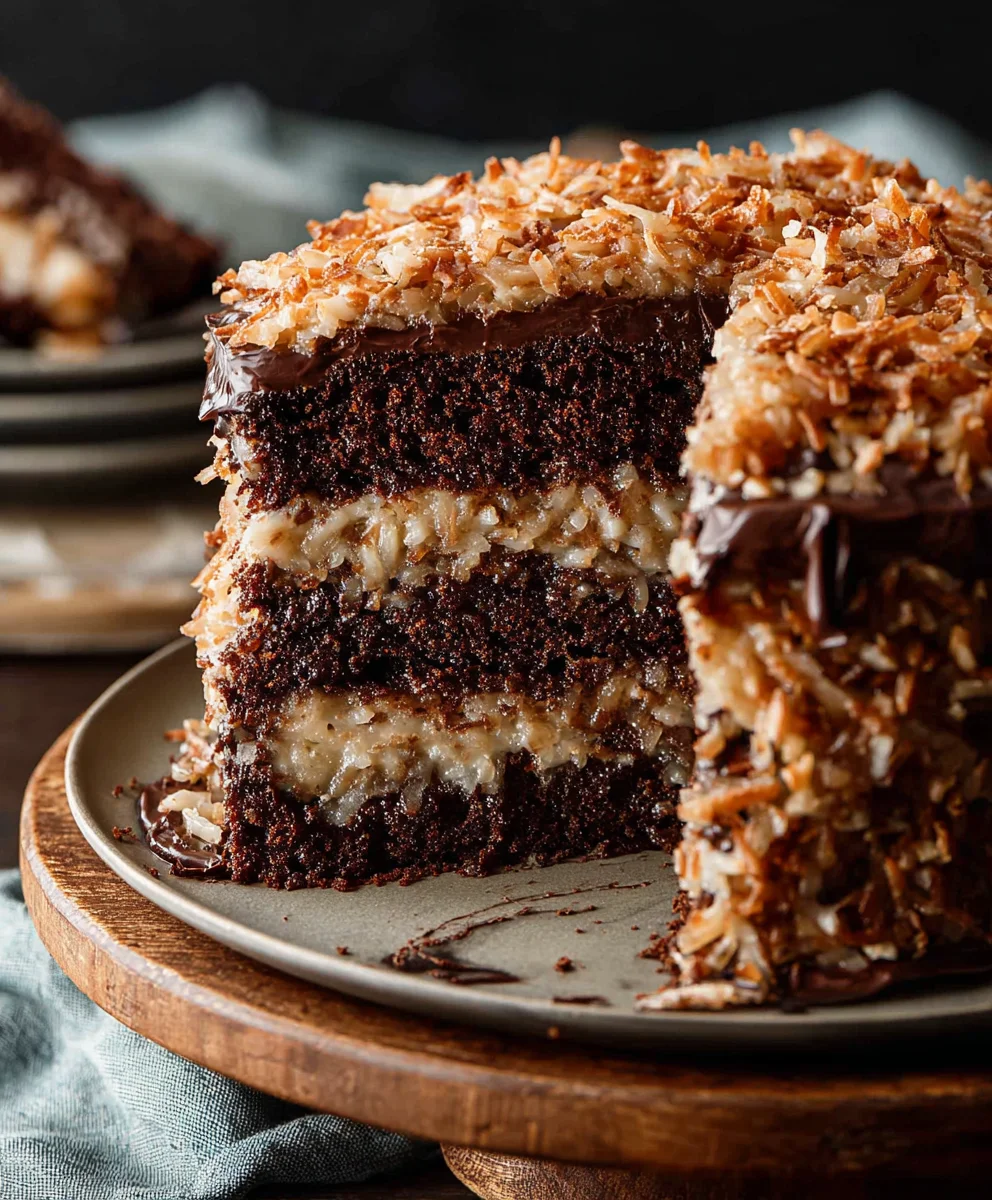
Traditional German Chocolate Cake is more than just a dessert; it’s a nostalgic journey back to childhood birthdays and cozy family gatherings. This iconic cake, often misunderstood to be from Germany, actually has American roots, but its rich, distinct flavor profile has cemented its place as a beloved classic worldwide. What draws so many to this magnificent creation? It’s that irresistible combination of moist, dark chocolate cake layers paired with a gloriously gooey, coconut-pecan frosting that defines the traditional German Chocolate Cake experience. Unlike other chocolate cakes, it’s the unique, almost caramel-like frosting, studded with sweet coconut flakes and crunchy pecans, that truly sets it apart. This isn’t just about sweetness; it’s about layers of complex flavors and textures that sing in harmony. Get ready to bake a piece of history that’s guaranteed to impress with its decadent charm and comforting familiarity.
Ingredients:
- 4 ounces semi-sweet chocolate, finely chopped
- 1/4 cup Dutch-process cocoa powder
- 1/2 cup boiling water
- 2 cups all-purpose flour
- 3/4 teaspoon baking soda
- 12 tablespoons unsalted butter, softened
- 1 cup granulated sugar (for the cake batter)
- 3/4 cup light brown sugar, packed (for the cake batter)
- 3/4 teaspoon salt
- 4 large eggs (for the cake batter)
- 1 teaspoon vanilla extract
- 3/4 cup sour cream
- 2 cups heavy cream (or evaporated milk, for the frosting)
- 2 cups granulated sugar (for the frosting)
- 6 large egg yolks (for the frosting)
Preparing the Cake Batter
Step 1: Melt the Chocolate and Bloom the Cocoa
Begin extract by preparing the rich chocolate components for your Traditional German Chocolate Cake. In a medium-sized heatproof bowl, combine the finely chopped semi-sweet chocolate with the Dutch-process cocoa powder. Pour the 1/2 cup of boiling water over this mixture. Stir gently until the chocolate is completely melted and the cocoa powder has dissolved, forming a smooth, glossy paste. This process is called “blooming” the cocoa, which intensifies its flavor. Set this chocolate mixture aside to cool slightly while you prepare the other cake ingredients. It’s important that it’s not too hot when you add it to the batter to avoid cooking the eggs prematurely.
Step 2: Cream Butter and Sugars, Incorporate Eggs and Vanilla
In a large mixing bowl, cream together the 12 tablespoons of softened unsalted butter with 1 cup of granulated sugar and the 3/4 cup of packed light brown sugar. Beat them with an electric mixer on medium-high speed until the mixture is light, fluffy, and pnon-alcoholic ale in color. This creaming process incorporates air, which contributes to a tender cake crum extractb. Next, add the 4 large eggs, one at a time, beating well after each addition to ensure they are fully incorporated. Scrape down the sides of the bowl as needed. Stir in the 1 teaspoon of vanilla extract. This foundation of butter, sugars, and eggs is crucial for the cake’s texture and sweetness.
Step 3: Combine Dry Ingredients and Alternate with Wet Ingredients
In a separate medium bowl, whisk together the 2 cups of all-purpose flour, the 3/4 teaspoon of baking soda, and the 3/4 teaspoon of salt. In a small bowl, whisk together the 3/4 cup of sour cream with the slightly cooled chocolate-cocoa mixture from Step 1. Now, you will alternate adding the dry ingredients and the sour cream mixture to the creamed butter and egg mixgin extracte. Begin by adding about one-third of the flour mixture and beat on low speed until just combined. Then, add half of the sour cream and chocolate mixture and mix until incorporated. Repeat this process, adding another third of the flour, then the remaining sour cream mixture, and finally the last third of the flour. Be careful not to overmix the batter at this stage, as this can develop the gluten too much and result in a tough cake. Mix only until no dry streaks of flour remain.
Preparing the German Chocolate Frosting
Step 4: Cook the Custard Base for the Frosting
This frosting is the signature element of a Traditional German Chocolate Cake, and it’s made with a luscious cooked custard. In a medium, heavy-bottomed saucepan, whisk together the 2 cups of granulated sugar, the 6 large egg yolks, and the 2 cups of heavy cream (or evaporated milk). Place the saucepan over medium-low heat. Cook, stirring constantly with a whisk or wooden spoon, for about 10 to 15 minutes. You’ll need to be patient and keep the heat gentle to prevent scrambling the egg yolks. The mixture should thicken enough to coat the back of a spoon. You can test this by drawing a line through the custard with your finger; if the line holds and doesn’t immediately blend back together, it’s ready.
Step 5: Add Coconut and Pecans to the Frosting
Once the custard base has thickened, remove the saucepan from the heat. Stir in 1 cup of shredded sweetened coconut and 1 cup of chopped pecans. The heat from the custard will slightly toast the coconut and pecans, releasing their wonderful aromas and flavors. Continue stirring until everything is evenly distributed throughout the frosting. Allow the frosting to cool at room temperature for about 30 minutes, stirring occasionally. As it cools, it will continue to thicken to a spreadable consistency. If it becomes too thick, you can stir in a tablespoon or two of warm water or milk to loosen it.
Assembling and Baking the Cake
Preheat your oven to 350°F (175°C). Grease and flour two 9-inch round cake pans, or line them with parchment paper. Pour the cake batter evenly into the prepared pans. Bake for 30 to 35 minutes, or until a wooden skewer inserted into the center of the cakes comes out clean. Let the cakes cool in the pans for about 10 minutes before inverting them onto a wire rack to cool completely. Once the cakes are entirely cool, you can frost them generously with the prepared German chocolate frosting. Spread a thick layer between the cake layers and then cover the top and sides. For an extra touch, you can sprinkle some additional toasted coconut and chopped pecans over the top.
Conclusion:
And there you have it – your guide to creating a truly delicious Traditional German Chocolate Cake! We’ve walked through each step, from creaming the butter and sugar to perfecting that iconic coconut-pecan frosting. This cake is a testament to rich, decadent baking, offering a delightful balance of moist chocolate cake and a sweet, nutty topping that is simply irresistible. It’s the perfect centerpiece for any celebration, or simply a wonderful way to treat yourself and your loved ones.
When it comes to serving, a generous slice of Traditional German Chocolate Cake needs little else. However, it pairs beautifully with a scoop of vanilla bean ice cream or a dollop of freshly whipped cream. For variations, consider adding a touch of espresso powder to the chocolate cake batter for a deeper flavor, or toasting the pecans before adding them to the frosting for an extra layer of crunch and aroma. Don’t be afraid to experiment and make this recipe your own! We encourage you to get into the kitchen and experience the joy of baking this classic.
Frequently Asked Questions:
Can I make the frosting ahead of time?
Yes, absolutely! The coconut-pecan frosting can be made a day or two in advance and stored in an airtight container in the refrigerator. You may need to gently reheat it on the stovetop or in the microwave over low heat, stirring frequently, to achieve the correct spreading consistency before frosting the cooled cake.
My cake layers are sticking to the pan. What can I do?
Ensuring your cake pans are properly greased and floured is key. For extra insurance, you can also line the bottoms of the pans with parchment paper after greasing and flouring. Once the cake is out of the oven, allow it to cool in the pan for about 10-15 minutes before attempting to invert it onto a wire rack to cool completely. This cooling period allows the cake to set slightly, making it less likely to break.
Best Traditional German Chocolate Cake Recipe
A classic and decadent German Chocolate Cake recipe featuring a rich chocolate cake and a creamy, nutty coconut frosting.
Ingredients
-
4 ounces semi-sweet chocolate, finely chopped
-
1/4 cup Dutch-process cocoa powder
-
1/2 cup boiling water
-
2 cups all-purpose flour
-
3/4 teaspoon baking soda
-
12 tablespoons unsalted butter, softened
-
1 cup granulated sugar
-
3/4 cup light brown sugar, packed
-
3/4 teaspoon salt
-
4 large eggs
-
1 teaspoon vanilla extract
-
3/4 cup sour cream
-
2 cups heavy cream
-
2 cups granulated sugar
-
6 large egg yolks
-
1 cup shredded sweetened coconut
-
1 cup chopped pecans
Instructions
-
Step 1
Melt the semi-sweet chocolate and Dutch-process cocoa powder in a heatproof bowl. Pour boiling water over the mixture and stir until smooth and glossy. Set aside to cool slightly. -
Step 2
In a large bowl, cream together softened butter, granulated sugar, and light brown sugar until light and fluffy. Beat in eggs one at a time, then stir in vanilla extract. -
Step 3
In a separate bowl, whisk together flour, baking soda, and salt. In another small bowl, whisk sour cream with the cooled chocolate-cocoa mixture. Alternately add dry ingredients and the sour cream mixture to the butter mixture, beginning and ending with dry ingredients. Mix until just combined. -
Step 4
Prepare the frosting by whisking together granulated sugar, egg yolks, and heavy cream in a saucepan. Cook over medium-low heat, stirring constantly, for 10-15 minutes until thickened enough to coat the back of a spoon. -
Step 5
Remove the frosting base from heat. Stir in shredded coconut and chopped pecans. Let cool at room temperature for about 30 minutes. -
Step 6
Preheat oven to 350°F (175°C). Grease and flour two 9-inch round cake pans. Pour batter evenly into prepared pans and bake for 30-35 minutes, or until a skewer inserted comes out clean. -
Step 7
Let cakes cool in pans for 10 minutes before inverting onto wire racks to cool completely. Frost the cooled cakes with the prepared German chocolate frosting.
Important Information
Nutrition Facts (Per Serving)
It is important to consider this information as approximate and not to use it as definitive health advice.
Allergy Information
Please check ingredients for potential allergens and consult a health professional if in doubt.